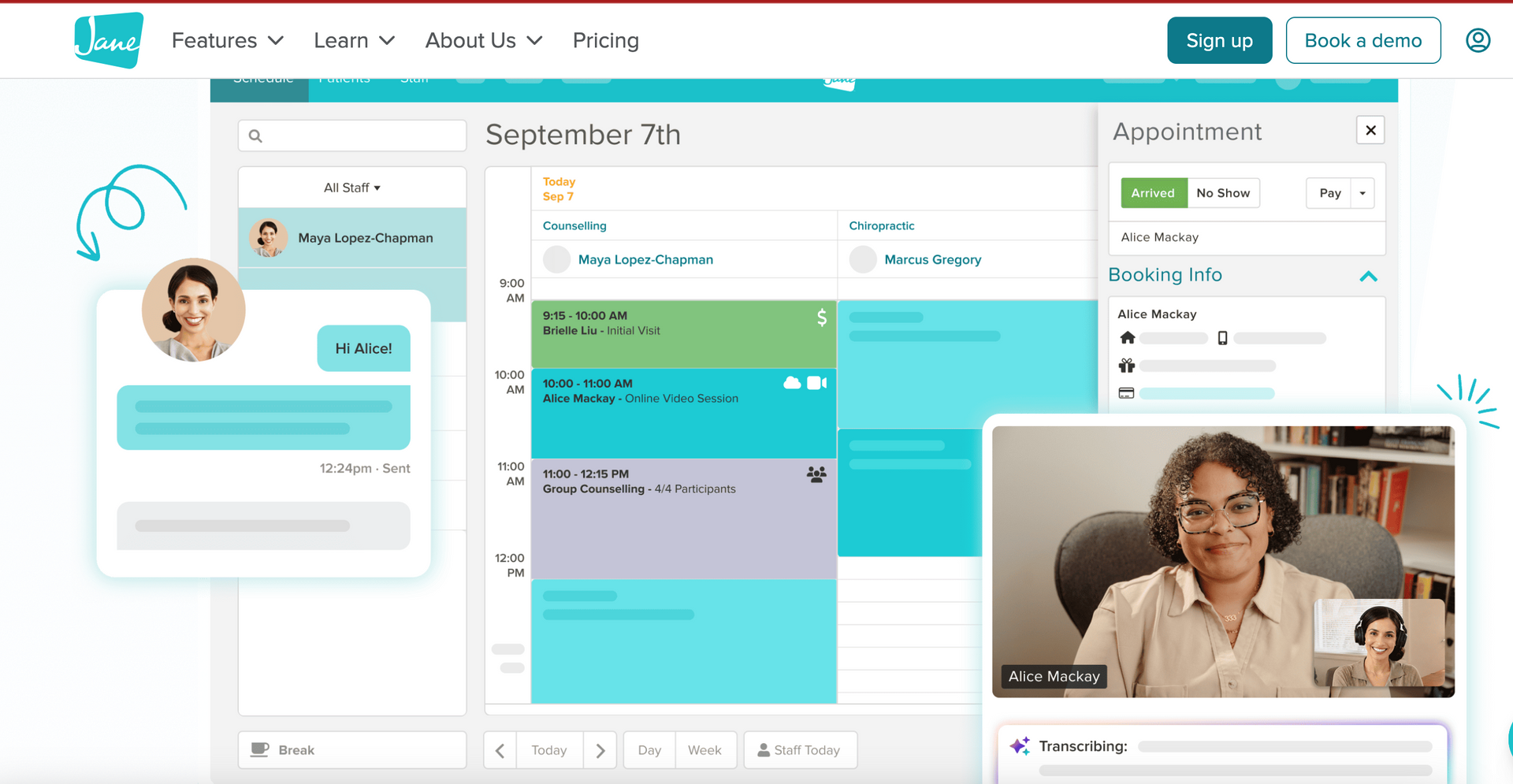

Jane app vs Simple Practice: my honest opinion
Every few weeks, someone in a therapist group asks the same question: Jane or SimplePractice? And every time, the comments turn into a wall of conflicting opinions that leaves people more confused than when they started. I've spent real time in both platforms, and as a business coach for therapists who's helped plenty of people through this exact fork in the road inside my course for launching a private practice, I want to give you a straight answer instead of another list of features copied from each company's own marketing page.
I also have a bias I'd rather name than pretend away. Two years ago I moved my entire group practice onto Jane, and I audit other therapists' websites and workflows often enough to see both platforms from the inside. I'm also a Jane affiliate, so if you sign up through my links I may earn a small commission at no extra cost to you. Where SimplePractice is the better call, I'll still say so.
These are genuinely two of the most well built practice management platforms available to therapists right now. Neither one is bad. But they were built with different practices in mind, and that difference is exactly why the "which one is better" debate never actually resolves in those Facebook threads.
What is the core difference between Jane app and SimplePractice?
Jane was built with multi disciplinary and group clinics in mind, think practices with physical therapists, chiropractors, or several practitioners sharing scheduling and rooms. SimplePractice was built specifically around US based mental health providers, whether solo or group, with a strong focus on insurance workflows and telehealth.
That single difference in who each platform was designed for explains almost every other difference you'll read about below.
Why fit matters more than feature count
Most of the "which one is better" debates online skip right past this and jump straight to feature lists. A feature Jane built for a six practitioner physical therapy clinic isn't inherently better or worse than one SimplePractice built for a solo mental health provider. It's just built for a different day to day reality than yours. The point isn't to find the platform with the most features. It's to find the one that disappears into the background of your day instead of becoming its own daily obstacle.
One caveat before we go on. If you're solo today and expect to stay solo, this is mostly a question about your own workflow. If you have associates, or you can picture hiring one, you're weighing something different: how several clinicians will use the same system without needing you to referee it. That's the part I underestimated, and I'll come back to it.
What happened when I moved my group practice to Jane
Two years ago I moved my whole practice to Jane. I'm telling you this not because your situation will be identical, but because the parts I was most afraid of went fine, and the parts I never thought about turned out to matter most.
The migration I was dreading took one weekend
The switch was much easier than I anticipated. Jane has an import team that handled exporting all of our files and getting them into Jane, and they did the actual work rather than handing me a CSV and wishing me luck.
Here's the real timeline:
- We started the import on a Friday
- They finished it on Saturday
- I went in Sunday and updated all of our client profiles
- By Monday we were back to business as usual
There was no interruption in clinical care. Nobody's session got cancelled. Nobody's history went missing. If "I don't want to move all my client records" is the sentence keeping you on a platform you've outgrown, I want you to know that this fear is doing more damage to your practice than the migration would.
The support difference I did not expect
With Jane, you can connect to a real person in minutes, either on the phone or on chat.
That sounds like a soft benefit until you run a practice with other people in it. Between me, new hires, our biller, and our virtual assistant, there are a lot of hands in the pot. Getting somebody to chat with an answer in ten minutes is the difference between a small hiccup and a week where nobody can bill anything.
On the plan side: Jane includes chat, email, and phone support on every tier, plus a free data import and a setup call. SimplePractice reserves its premium support phone line for the top Plus tier.
What do Jane and SimplePractice cost?
People love to say these two land in the same price range. On the sticker price, that's roughly true. Once you look at what each tier actually includes, it stops being true pretty quickly.
What Jane charges
Jane runs three plans, priced in Canadian dollars:
- Balance, CAD $54 per month. One practitioner profile, capped at 20 appointments per month. Built for a very part time or just starting caseload.
- Practice, CAD $79 per month. Includes one full time practitioner, unlimited appointments, unlimited staff profiles, free SMS appointment reminders where available in your region, and timesheets. Additional practitioners are $17.50 per month part time or $35 per month full time.
- Thrive, CAD $99 per month. Everything in Practice, plus rooms and equipment, automated waitlist management, patient self check in, return visit reminders, packages and memberships, and ratings and reviews. Additional practitioners are $20 or $40 per month.
Every single plan includes unlimited admins and locations, online booking through a custom branded site, one to one and group appointments, one to one telehealth, secure messaging, intake forms, custom charting templates, outcome measure surveys, treatment plans, invoices and receipts, and five free AI Scribe notes. Unlimited AI Scribe, group telehealth, insurance billing, and payroll are available as paid add ons.
What SimplePractice charges
SimplePractice also runs three plans, priced in US dollars, and frequently offers 50 percent off for the first three months:
- Starter, $49 per month. Basic diagnostic and treatment plans, measurement based care, online appointment requests, and electronic claim filing.
- Essential, $79 per month. Adds appointment reminders, calendar sync, customizable treatment plans, Wiley Treatment Planners, and 10 free insurance claims per month.
- Plus, $99 per month. Adds group appointments, group telehealth, the premium support phone line, automatic insurance status checks, and 35 free insurance claims per month.
The line items that move the real number
Compare the tiers side by side and a few things jump out that nobody mentions in the Facebook threads:
- Currency. Jane's prices are in Canadian dollars and SimplePractice's are in US dollars. If you're billing in USD, Jane's real cost to you is meaningfully lower than the number on the page. Check today's rate rather than trusting my math from whenever you're reading this.
- Appointment reminders. SimplePractice's cheapest plan doesn't include them. You need Essential at $79 to stop texting reminders yourself. Jane includes email reminders on every plan and free SMS reminders starting at the $79 CAD tier.
- Group work. SimplePractice puts group appointments on the $99 Plus tier. Jane includes group appointments and classes in every plan, though group telehealth is a paid add on rather than bundled.
- Claim volume. If insurance is your model, SimplePractice's free claim allowances are real value that Jane doesn't match natively.
How do Jane and SimplePractice compare on insurance billing?
This is usually the deciding factor for therapists, and it's the one place I'll give SimplePractice a clear point. SimplePractice offers built in insurance claims management and tracking right out of the box. Jane handles insurance through an add on and through integrations with external clearinghouses like Claim.MD.
Why this matters more than it seems
If insurance makes up the majority of your income and you want claims to live natively inside your EHR with nothing else to configure, SimplePractice is built for exactly that and Jane will feel like extra setup.
This is also exactly why the insurance decision has to happen before the software decision, not after. If you're still working through whether or how to get paneled at all, that's a separate process from picking an EHR, and it's worth sorting out first. I lay out the whole thing in my complete guide to insurance credentialing for therapists, so you're choosing your billing model on purpose instead of backing into it because of which software you happened to pick.
What the clearinghouse step actually looks like day to day
Here's where I'd push back on how this gets talked about online, though. The internet describes the clearinghouse integration like it's a daily tax. That has not been my experience.
My practice is private pay, and we also do out of network claim submissions through the Claim.MD integration with Jane. It has been genuinely easy and seamless, both for keeping track of everything and for rectifying issues when they come up. It's a setup step, not an ongoing chore. Once it's connected, I'm not thinking about it.
So the honest version is narrower than "Jane is bad at insurance." If you're fully paneled and submitting high claim volume weekly, SimplePractice's native workflow is the smoother road. If you're private pay, out of network, or somewhere in between, this difference is much smaller than the comment section makes it sound.
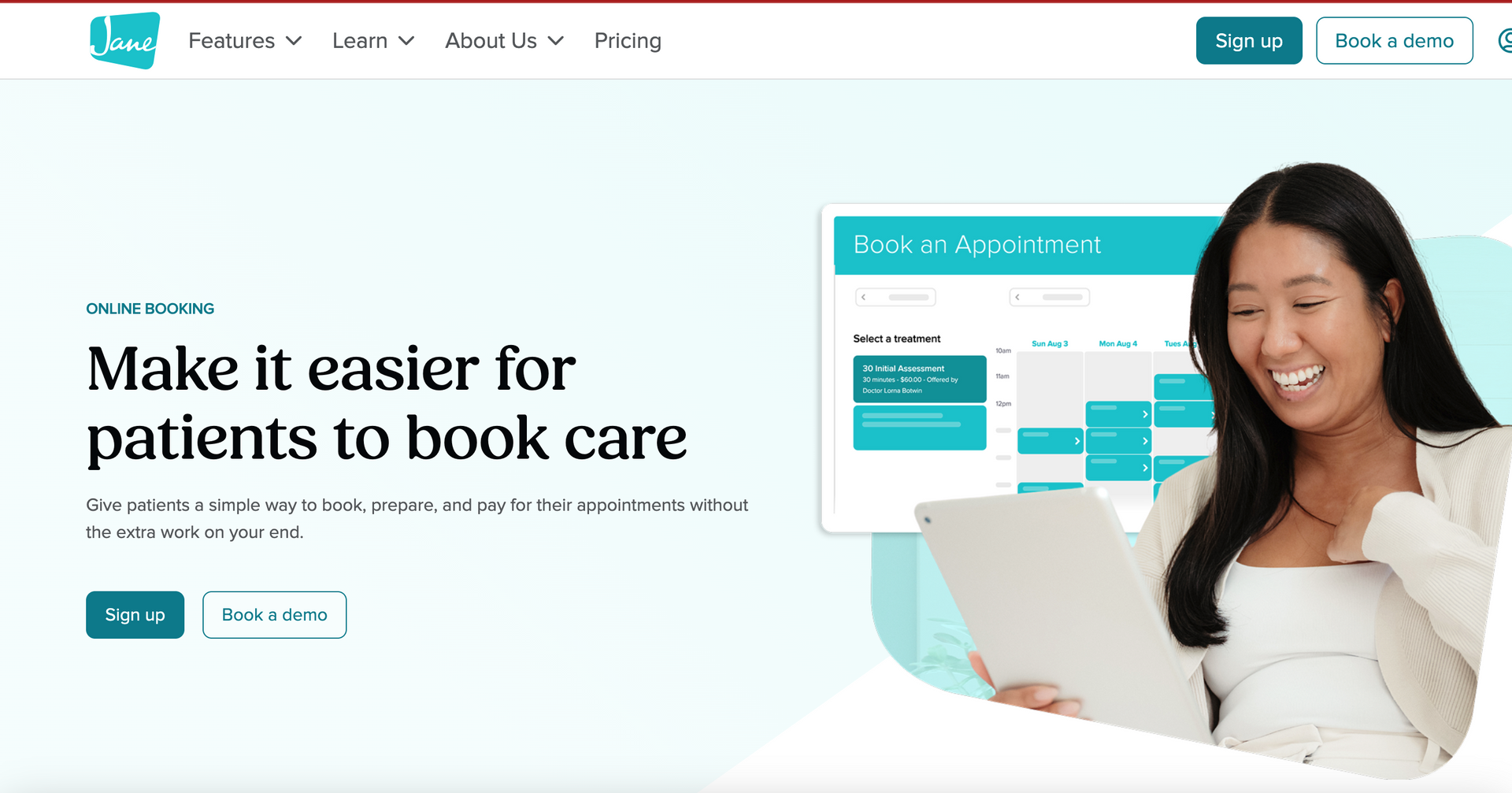
Which client portal do your clients actually experience?
This is the comparison almost nobody makes, and it's the one I'd argue matters most for filling your caseload. Your portal is where a nervous person lands after they finally work up the nerve to click "book." If that page feels like a different, colder company than the website that convinced them, you lose some of them right there.
What I see when I audit therapists' setups
Jane's client portal is deeply customizable, and it's one of my favorite things about the platform. You can set it up with your disciplines and specialties, your brand colors, your fonts. When folks go from our website into our client portal, it seems like a very seamless experience, like it's all part of the same site.
I audit a lot of therapists' websites and workflows, and I haven't found that with other softwares. SimplePractice's client portal and TherapyNotes' client portal are both a very stark difference from what those practices' websites look like. Your marketing spends months building trust, and then the booking page quietly resets it.
If you've invested in a website you actually like, click through both portals during your trial as if you were a brand new client rather than the owner.
Which platform has a better mobile experience?
SimplePractice offers full featured native mobile apps for both clinicians and clients. Jane relies primarily on a responsive web browser for practitioners, with a separate client facing app for booking, messaging, and joining sessions.
What this looks like in real practice
Therapists who travel between locations, or who prefer checking their schedule from a phone rather than opening a laptop, tend to find SimplePractice's native app smoother. I hear this most from therapists fitting sessions around school pickup, a second job, or a practice they're also supervising.
How much weight this should actually carry
I'd be careful not to let this one decide everything, though, because it's the easiest difference to notice in a two week trial and one of the smaller ones over five years. Ask yourself honestly what you do from your phone. Confirming appointments and reading messages? Jane's mobile browser and client app handle that fine. Writing full progress notes on a phone screen? That's a real limitation and you should weigh it heavily. Most therapists I coach find they were describing an aspiration rather than a habit. They pictured charting from a coffee shop, and in reality they chart at a desk with a real keyboard.
What about charting and clinical documentation?
Jane is genuinely strong here, offering deep customization for clinical documentation and specialized charting, which is part of why it's popular well beyond mental health. SimplePractice offers structured templates built around standard mental health measures and treatment planners, which many solo therapists find is exactly the structure they need with no customization required.
A question worth asking before you compare features at all
Before you get lost comparing template libraries, ask yourself what your actual documentation habit looks like right now. Are you the therapist who writes detailed, narrative notes, or the one who wants a checklist you can move through quickly between sessions? Jane rewards the first style. SimplePractice's structured templates reward the second. Neither is more clinically sound. They just support different working habits, and being honest with yourself about which one you actually are will save you a frustrating first month.
Both platforms now offer AI assisted notes. I don't personally use Jane's AI Scribe yet, but a lot of therapists I work with do and they love it, mostly because it collapses the documentation tail that keeps them at their desk long after the last client leaves. Jane includes five free AI Scribe notes on every plan, so you can test it before paying for unlimited.
Where Jane pulls ahead if you have a team
This is the group practice piece I mentioned earlier, and it's the backend flexibility I'd have a hard time giving up.
Jane lets me customize the intake experience for every single therapist. If a client schedules with therapist A, therapist A might prefer certain screenings and assessments go out before the first session. Therapist B might just want informed consent sent, because they'd rather do everything in the room the first time around. Both preferences are valid, and Jane lets each clinician have theirs without me building a workaround.
Every therapist has different preferences about how they meet clients. A system that forces one intake flow across your whole team makes you the bottleneck, and you'll feel it every time you hire.
So which one should you actually choose?
Here's my honest answer, with the caveat that "honest" means I'll tell you where I'd send you, not that I'll pretend to have no opinion.
Choose SimplePractice if
- Insurance is the majority of your caseload and you want claims handled natively with nothing else to set up
- You genuinely run your practice from your phone, including documentation
- You want minimal setup and structured templates rather than something you configure yourself
Choose Jane if
- You're private pay, out of network, or a mix, and a clearinghouse integration doesn't scare you
- You care about your client portal feeling like an extension of your website rather than a different company
- You want real control over your chart templates instead of a one size fits all note
- You do couples, family, or group work and want that supported natively
- You have associates, or you can picture hiring one, and you want per clinician intake flexibility
- You want to be able to reach a human on the phone or chat without paying for a premium tier
What if you're still not sure which practice model fits you?
If you've already read this and quietly decided you want to move to Jane, but the thing stopping you is the idea of migrating everything, I made you something for that. Grab my free guide, Switching EHRs 101. It walks you through how to move your practice from one system to another without losing client records, cancelling sessions, or spending a weekend in a quiet panic. It's the guide I wish someone had handed me before I moved my own practice.

Hey there, I’m Alicia Murray
A licensed therapist, multi-six-figure group practice owner, mom of 2, and the founder of Therapist HQ.